Versatile Installation and Integration Capabilities
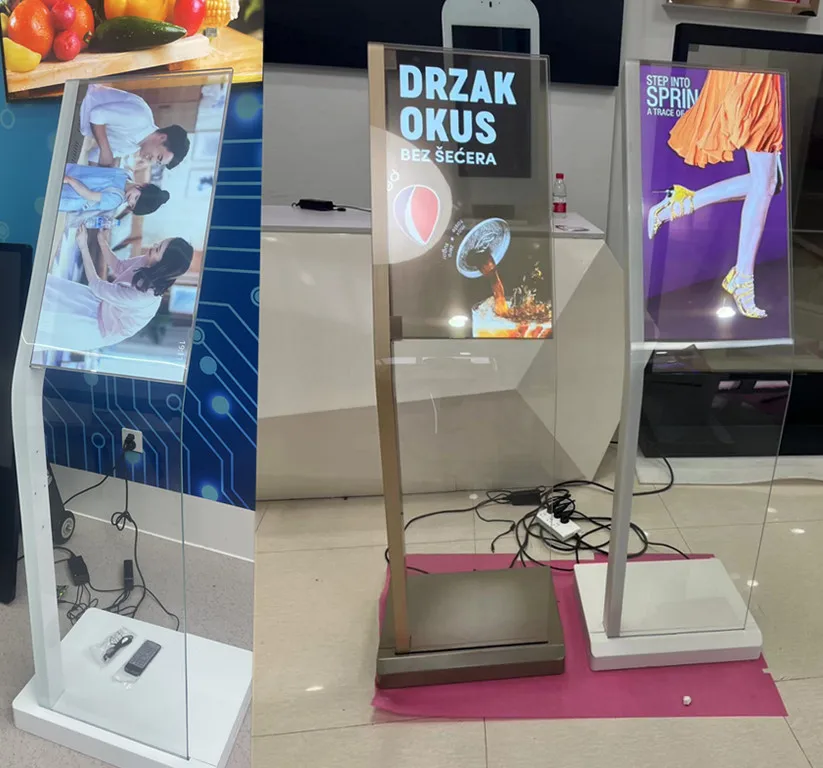
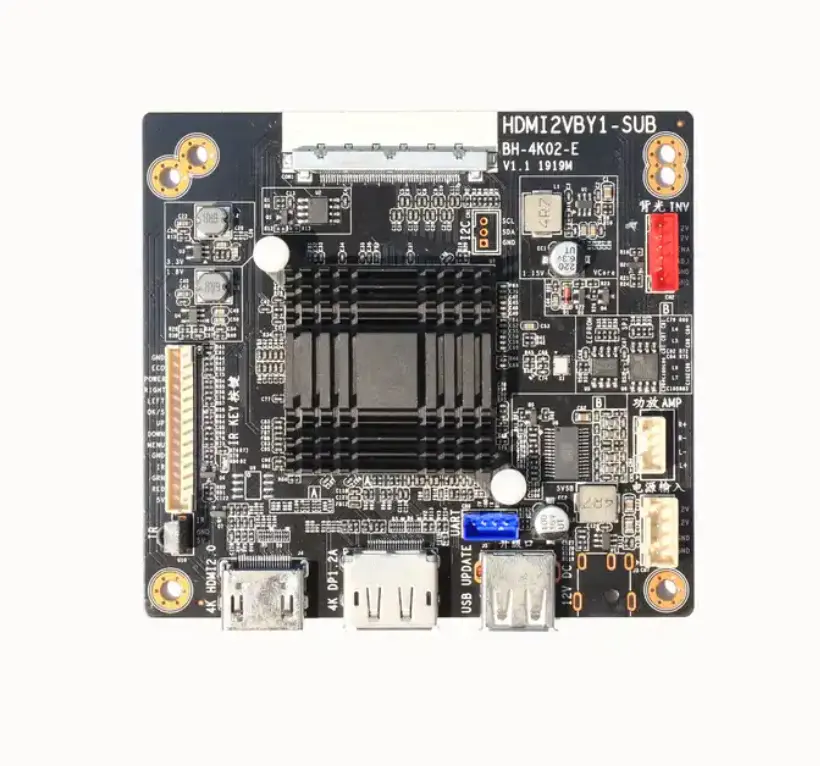
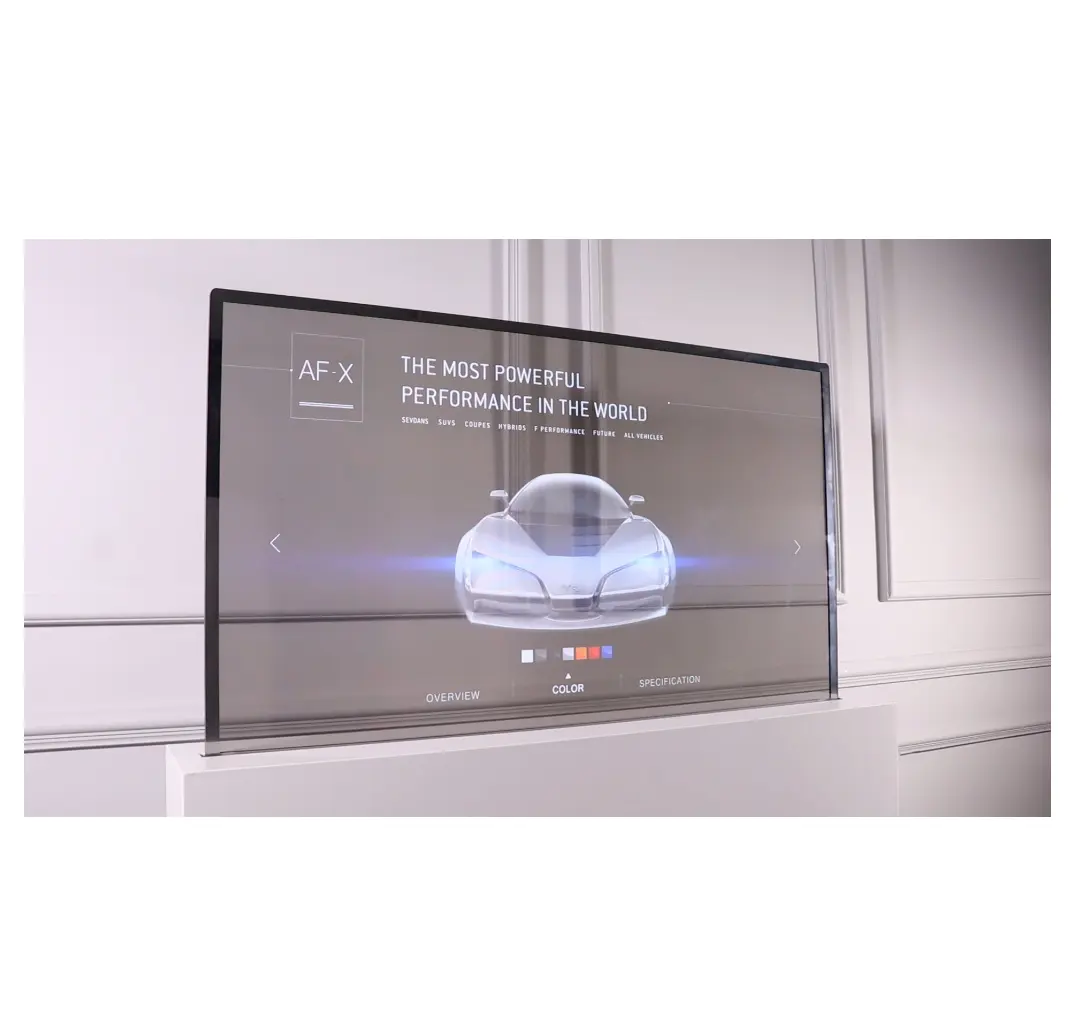
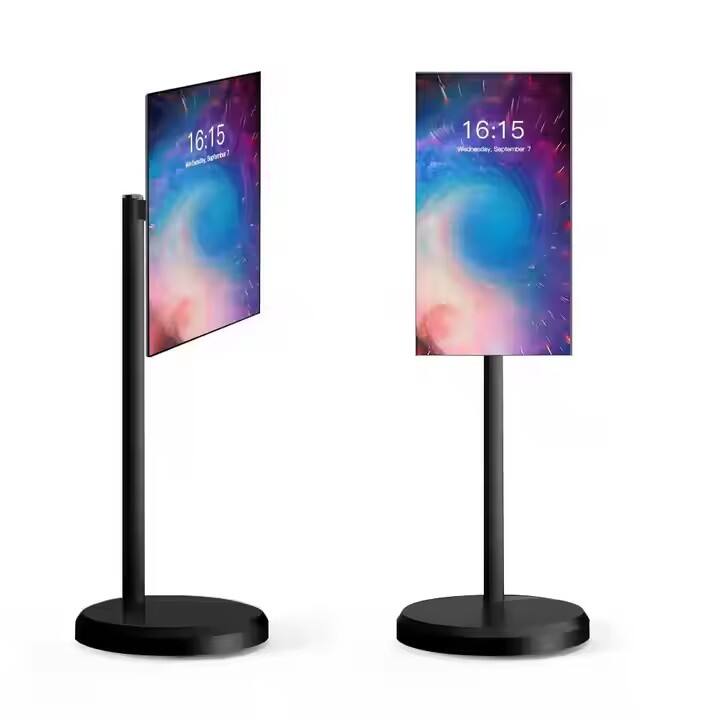
The remarkable installation flexibility and integration capabilities of OLED transparent displays enable creative implementations that were previously impossible with conventional display technologies, opening new horizons for architects, designers, and technology integrators seeking innovative visual solutions. The ultra-thin profile and lightweight construction of OLED transparent screens facilitate mounting options that range from traditional wall installations to creative suspended configurations, window integrations, and custom architectural features. This versatility stems from the elimination of bulky backlighting components and the compact design of organic light-emitting diode technology, resulting in displays that measure just millimeters in thickness while maintaining structural integrity and visual performance. The mounting systems accommodate various orientations including landscape, portrait, and even curved installations where the flexible substrate technology permits custom shapes and configurations. Integration possibilities extend beyond simple mounting solutions, as OLED transparent displays seamlessly connect with existing infrastructure through standard connectivity protocols including HDMI, DisplayPort, USB, and wireless transmission systems. This compatibility ensures smooth integration with current audio-visual systems, content management platforms, and interactive control interfaces without requiring extensive infrastructure modifications or specialized equipment. The displays support daisy-chain configurations for multi-screen installations, enabling expansive transparent display walls that maintain synchronization and uniform image quality across all connected units. Advanced features include built-in processors that handle content scaling, color management, and system diagnostics, reducing the complexity of external control requirements and simplifying installation procedures. Professional installers appreciate the reduced weight and improved handling characteristics that minimize installation time and labor costs compared to traditional display solutions. The absence of heat-generating backlights eliminates ventilation requirements in enclosed installations, expanding placement possibilities in architectural features where airflow might be restricted. Maintenance accessibility remains excellent due to the reliable solid-state construction and diagnostic capabilities that enable remote monitoring and troubleshooting, reducing service visits and maintaining optimal performance throughout the display's operational lifetime.

 EN
EN